

Identify who comes in
Cameras at head height and the right angle to capture faces clearly at doors, gates and reception.
We design and install IP and HD CCTV for businesses across Lancashire and the North West — cameras placed to cover entrances, yards and stock rather than just walls, recording you can actually find footage on, and remote viewing set up securely on your network.
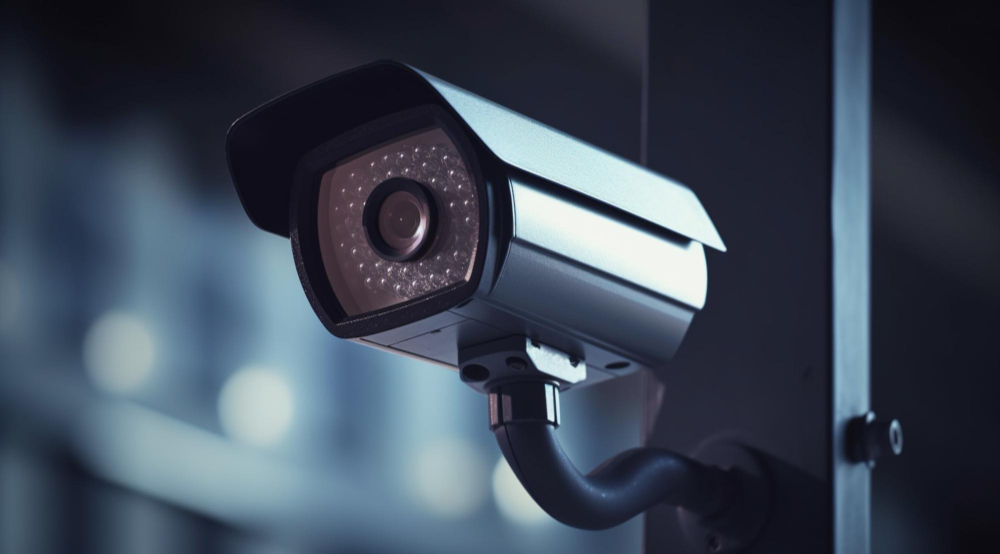
A useful CCTV system answers a question after something happens: who came through that door, which vehicle left the yard, where the stock went. That depends on camera positions, the right lens for the distance, enough resolution to identify a face or a number plate, and footage that's easy to find.
Most disappointing systems fail on planning, not equipment. We start with what you need to see and work back to the cameras.
New sites usually get IP cameras on the network. Where good coax is already in place, an HD analogue upgrade can lift image quality without re-cabling. We'll tell you which makes sense.
| IP CCTV | HD analogue | |
|---|---|---|
| How it connects | Network cabling, often powered over the same cable (PoE) | Existing or new coax back to a recorder |
| Image quality | High resolution, with smart detection on many models | A big step up from old analogue systems |
| Best for | New installs, larger sites, network integration | Upgrading existing coax systems on a budget |
| Remote viewing | Yes, set up securely | Yes, via the recorder |
| Expansion | Add cameras anywhere the network reaches | Limited by recorder channels and coax routes |
We plan each camera around a purpose — identify, recognise or observe — and choose the lens and position to match.
Cameras at head height and the right angle to capture faces clearly at doors, gates and reception.
Wide views for activity plus targeted cameras for vehicles at gates, with good low-light performance.
Cameras covering loading bays, high-value stock and processes, without filming areas you don't need to.
If your cameras capture people, the footage is personal data under UK GDPR. That means having a clear reason for each camera, signs telling people CCTV is in use, sensible retention, and a way to respond if someone asks for footage of themselves. The ICO publishes guidance for businesses.
We design camera views to cover what you need without overreaching — avoiding neighbouring property and private spaces — and set retention on the recorder to match your policy.
We plan the system with you before anything is fitted, so the cameras end up where they're useful.
We walk the site with you and agree what each area needs to capture.
Camera types, lenses, positions, recording and storage, with a fixed price.
Cabling, cameras and recorder installed tidily, around your working hours.
Recording, retention, detection zones and secure remote viewing set up.
Training on finding and exporting footage, plus a camera schedule and as-built drawings.
IP cameras are network devices, so the cabling, switches and connections matter as much as the cameras. Because we install structured cabling and wireless links, we can reach cameras on the far side of a yard or in a separate building without digging, and keep the CCTV network properly separated from your office systems.
Tell us about the site and what you want to protect, and we'll arrange a survey.
For a new installation, IP is usually the better choice: higher resolution, more flexible placement and easier expansion over the network. If you already have good coax cabling, an HD analogue upgrade can be a cost-effective improvement without re-cabling. We'll recommend one at survey.
Yes. We set up remote viewing on phones and computers, configured securely rather than by opening the recorder up to the internet with default passwords.
It depends on the number of cameras, resolution, recording settings and storage. We size the recorder for the retention you need and set it to overwrite automatically, so it keeps a rolling period rather than filling up.
Yes. If your cameras capture people, UK GDPR requires you to let them know CCTV is in use, usually with clear signs at entrances. You also need a clear purpose for the system and a sensible retention period.
Yes. Where running cable is impractical, we use point-to-point or point-to-multipoint wireless links to connect cameras in yards, gatehouses and outbuildings back to the recorder.
Often, yes. We can replace old cameras with HD models over the existing coax, add IP cameras alongside, replace a failing recorder or extend coverage, rather than starting from scratch.
Most of the cameras we install have infrared or low-light capability for night-time images. For areas where identification at night matters, such as gates and car parks, we may add lighting or specify cameras designed for low light.
It can share the same cabling, but we normally separate CCTV traffic from your business systems so a busy recorder doesn't slow the office down, and so the cameras are better protected.
CCTV is usually part of a wider site network. These pages cover the systems it connects to.
PoE cabling, switches and cabinets for IP cameras.
Connect yard and outbuilding cameras without digging.
A connection fast enough for reliable remote viewing.
Site-wide PA installed by the same team.
CCTV, Wi-Fi and networks for big-shed sites.
CCTV and data packages delivered for M&E contractors.
Send us the type of site and the areas you want to cover. We'll arrange a survey and come back with a camera plan and a fixed price.