

Upload is the problem
Video calls, cloud apps and offsite backups all depend on upload speed — the part copper and most broadband packages short-change.
We find the right connection for your site, manage the order with the carrier, install it and wire it properly into your network — from full-fibre broadband for a small office to dedicated leased lines with automatic failover. One point of contact from the availability check to go-live, and after it.
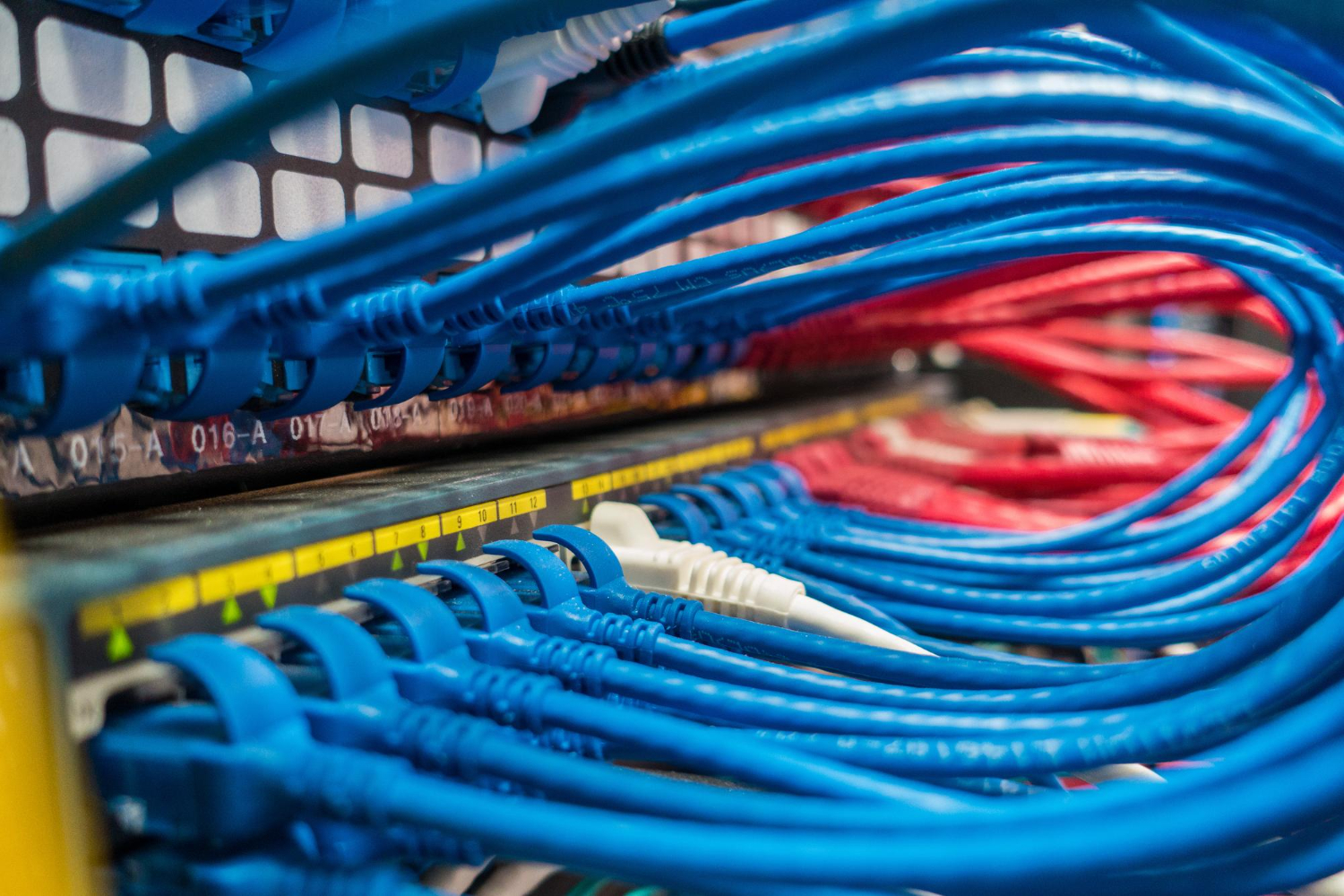
A leased line is a dedicated fibre connection between your premises and the internet that isn't shared with anyone else. You get the same speed up and down, consistent performance at the busiest times of day, and a service level agreement with a guaranteed fix time.
Full-fibre broadband is shared and much cheaper, and it's the right answer for plenty of smaller offices. The choice comes down to how many people and systems depend on the connection — and what an hour without it costs you.
Most sites don't ask us for a leased line. They ask why Teams keeps freezing, why the cloud backup never finishes, or why the whole office stops when one line drops.
Video calls, cloud apps and offsite backups all depend on upload speed — the part copper and most broadband packages short-change.
Shared connections get contended at peak hours, so calls break up and file transfers crawl exactly when people are busiest.
A single connection with no failover means a digger, a fault or a storm can stop the business for days.
We're not tied to selling you the biggest circuit. We check what's actually available at your address and recommend what fits the number of users, the systems they rely on and the budget.
| Full-fibre broadband (FTTP) | SoGEA broadband | Ethernet leased line | |
|---|---|---|---|
| Bandwidth | Up to around 1 Gbps download, lower upload | Up to 80 Mbps download, 20 Mbps upload | 100 Mbps to 10 Gbps, same speed both ways |
| Shared with others? | Yes | Yes | No — dedicated to you |
| Repair commitment | Best-effort | Best-effort | Guaranteed fix time under an SLA |
| Typical lead time | 2–6 weeks | Days to weeks | 45–90 days |
| Guide monthly cost | £40–£90 | Varies | £200–£450 |
| Best for | Smaller offices on a budget | Sites with no full fibre yet | Teams that can't afford to stop |
Guide figures only. Price and lead time depend on the address, the bandwidth, contract length and whether new construction is needed to reach the building — we confirm both before you commit. All three options continue to work after the PSTN switch-off.
Openreach retires the old copper phone network (PSTN) on 31 January 2027. Analogue lines, ISDN and the broadband that depends on them — ADSL and older FTTC packages with a phone line — go with it.
It isn't only phones. Alarm diallers, lift lines, card terminals, door entry and franking machines often sit on an analogue line nobody remembers. We audit what's connected, move the internet onto a digital service and port your numbers to a VoIP phone system. Our PSTN switch-off guide has the full checklist.
Every connection fails eventually. What matters is whether anyone notices. We build failover in from the start and configure it to switch automatically.
A dedicated leased line as the main connection, with a full-fibre broadband line on a different route ready to take over.
A mobile-data router that takes over within moments if the fixed line drops — ideal while a leased line is still on order.
Two leased lines on physically separate routes, often from different carriers, for sites where any downtime is unacceptable.
We handle the parts that usually stall an order — surveys, landlord permission and the cabling on site — and keep you updated until it's live.
We check every carrier available at your address, the realistic speeds and the costs.
A clear recommendation on connection type, bandwidth, failover and contract term.
We manage the carrier order, the survey and any landlord wayleave, and flag construction costs before you commit.
Router and firewall set up, voice prioritised, failover configured and cabled into your network.
Cutover planned out of hours, then one point of contact for any fault.
Most leased line providers stop at the box on the wall. We're a cabling and network company, so we also run the fibre or copper from where the carrier terminates to your comms cabinet, tidy the cabinet and connect it to your network. No finger-pointing between the internet provider and the installer.
Send us your postcode and we'll check what's available at the address.
A leased line is a dedicated, uncontended connection with the same speed in both directions and a guaranteed fix time. Full-fibre broadband is shared with other users, has much lower upload than download, and is repaired on a best-effort basis. Broadband is far cheaper; a leased line is for businesses that can't afford slow periods or long outages.
Typically 45–90 days from order. Where fibre already reaches the building and no construction is needed, it can be quicker. New ducting, road works or waiting for a landlord to sign a wayleave are what stretch it. A 4G or 5G router can keep you running while you wait.
If the carrier's survey finds that new ducting or digging is needed to reach your building, they can raise excess construction charges on top of the standard price. A minority of orders attract them. We tell you as soon as the survey comes back, before the work goes ahead, so you can decide.
It depends on what an outage or a slow connection costs you, not on head count. A 10-person firm running cloud accounts, VoIP and remote access can justify one. A small office with light internet use is usually better served by full-fibre broadband with a 4G backup.
It depends on the number of people, video calls, cloud backups and anything uploading large files. We size it from how you actually work rather than a rule of thumb, and a leased line can usually be upgraded later without new cabling.
On a leased line the carrier is committed to a fix time under the SLA. With failover configured, your traffic moves to the backup connection automatically, so calls and systems keep running while the fault is fixed.
Often, yes. If you lease the building or share it with other tenants, the carrier usually needs a wayleave from the landlord to install fibre. We prepare the paperwork and chase it, because it's one of the most common causes of delay.
If you're on ADSL or an FTTC package that relies on a phone line, yes — it needs to move to SoGEA, full-fibre broadband or a leased line before 31 January 2027. Leased lines, FTTP and SoGEA all continue to work.
Yes. Numbers can be ported to a VoIP phone system running over your new connection, so customers keep calling the same number.
Yes. We regularly deliver the connection and the cabling while a client's IT provider looks after the servers and devices, and we hand over cleanly with the configuration documented.
A new connection is usually part of a wider upgrade. These are the pages it most often sits alongside.
Hosted phones and number porting running over your new connection.
What changes on 31 January 2027 and how to check what you're affected by.
Spliced, tested fibre between cabinets, floors and buildings on your site.
The cabinet, patching and outlets the connection plugs into.
Share one connection with a second building without digging.
Coverage that makes the most of a faster connection.
We check every carrier at the address and come back with realistic speeds, lead times and prices for broadband, leased lines and failover — plus a straight recommendation.