

Interference & harsh conditions
Unscreened cable beside drives and motors, and outlets not rated for dust or moisture, cause intermittent faults that are hard to trace.
From Burnley and Pendle to the rest of the North West, manufacturing sites need networks that survive heat, dust, vibration and electrical noise — and installs that don't stop the line. We specify for the environment and work around production.
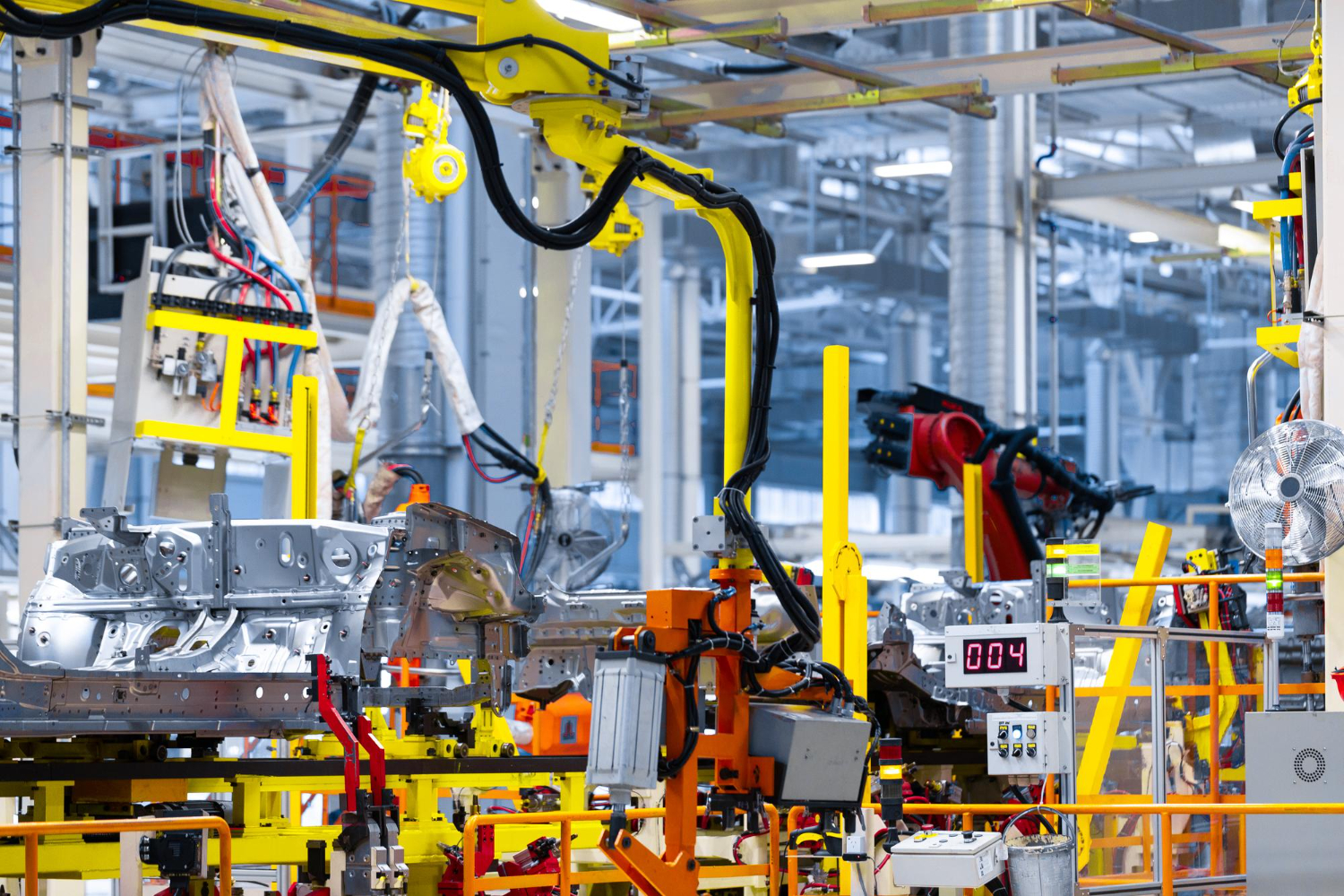
A factory network has to cope with conditions an office never sees: electrical interference from motors and drives, heat, dust, vibration and sometimes wash-down. It also has to connect machines, scanners and sensors as well as people, across distances longer than copper can reach from one comms room.
That means choosing the right cable, containment and outlets for each area, using fibre between distribution points, and designing Wi-Fi for a building full of steel.
Most network faults on production sites aren't equipment problems. They're cabling and design problems that show up months later.
Unscreened cable beside drives and motors, and outlets not rated for dust or moisture, cause intermittent faults that are hard to trace.
Production floors exceed copper limits from a single comms room, so the distribution design matters as much as the cabling.
Installs need to be phased around shifts and shutdowns so production carries on.
We choose cable, containment and outlets area by area, rather than specifying the whole building as if it were an office. Our industrial cabling guide explains the decisions in detail.
| Service | On a manufacturing site |
|---|---|
| Structured cabling | Screened cable where interference demands it, suitable outlets and containment for each area |
| Fibre backbones | Fibre between distribution points across large floors and between buildings |
| Enterprise Wi-Fi | Surveyed coverage for handhelds and tablets among machinery and racking |
| Public address | Zoned announcements that cut through production noise |
| CCTV | Coverage for entrances, yards, loading bays and stock |
| Point-to-point links | Connections to outbuildings and stores without digging |
On a racked warehouse and production site in Lancashire, we surveyed the Wi-Fi with the racking loaded, installed a fibre backbone between distribution points and Cat6A out to each access point, and phased the work zone by zone through nights and quieter shifts — with no disruption to operations. See our case studies for the full write-up.
Tell us about the site and the environment, and we'll recommend the right specification.
Often in some areas, not necessarily everywhere. Where cable runs near motors, drives or high-current equipment, screened cabling with correct earthing helps avoid interference. We specify it where the environment calls for it rather than across the whole site.
Yes. We phase work around shifts, weekends and planned shutdowns, and prove each area before moving on, so production carries on.
Yes, if it's designed for the space. Metal machinery and racking change how signal behaves, so we survey the working environment and position access points accordingly rather than guessing.
Yes. We run cabling to machines, controllers, scanners and terminals, with outlets and containment suited to the production environment.
Yes. Cabinet tidy-ups, re-labelling, documentation and replacing only the cabling that needs it are a big part of our work on established sites.
Yes. Copper is certified with Fluke DSX test equipment and fibre is OTDR tested, with labelling schedules and as-built drawings at handover.
The services and guides most relevant to manufacturing sites.
How to specify cabling that lasts in harsh environments.
Certified copper cabling, cabinets and containment.
Surveyed Wi-Fi for production floors.
Fibre and Wi-Fi for big-shed sites.
Multi-building, restricted-access sites.
Which grade to install and why.
Send us an outline of the site, the areas involved and your production constraints. We'll arrange a survey and come back with a specification and a fixed price.